In Regulated Work, Design for the Gates — Not the AI
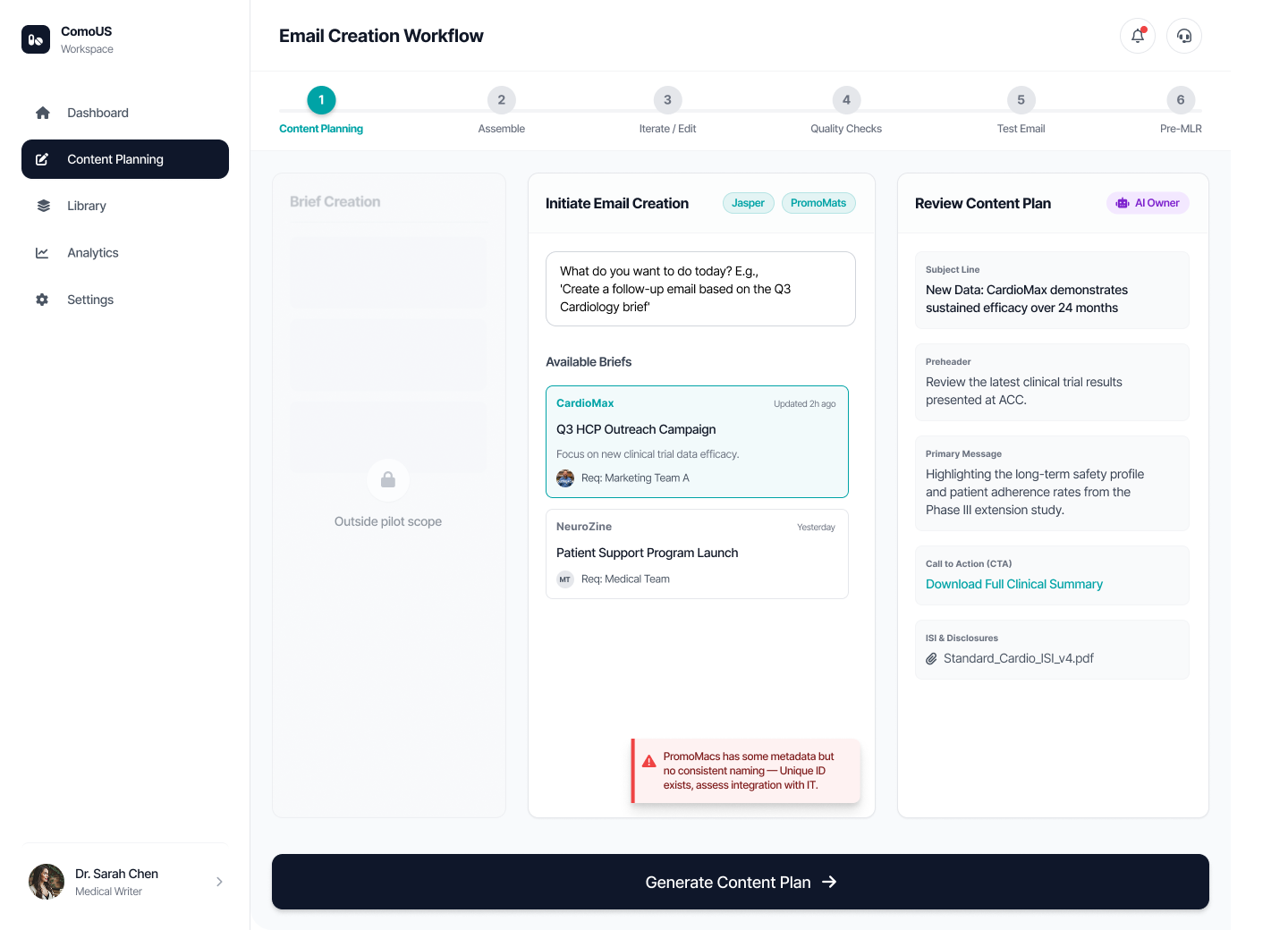
A pharma email takes two weeks and touches five teams in five tools. The AI's job is the work between the humans. The work the humans are legally required to do stays with them.
A regulated pharma email touches a medical writer, content operations, brand, medical-legal-regulatory review, and CRM. Each of those works in a different tool. Two weeks to send one email is considered normal.
Look at that and the AI-enhanced UX design pitch writes itself: generate the email. That's the wrong end of the problem.
The Slow Part Is Not the Writing
Writing the copy was never two weeks. The two weeks is handoffs: packaging work for the next team, waiting, receiving comments in a format that doesn't match the tool you work in, and reassembling.
Automating the writing compresses the fastest step in the chain. You end up with a first draft in ten seconds and a two-week review, which is where you started.
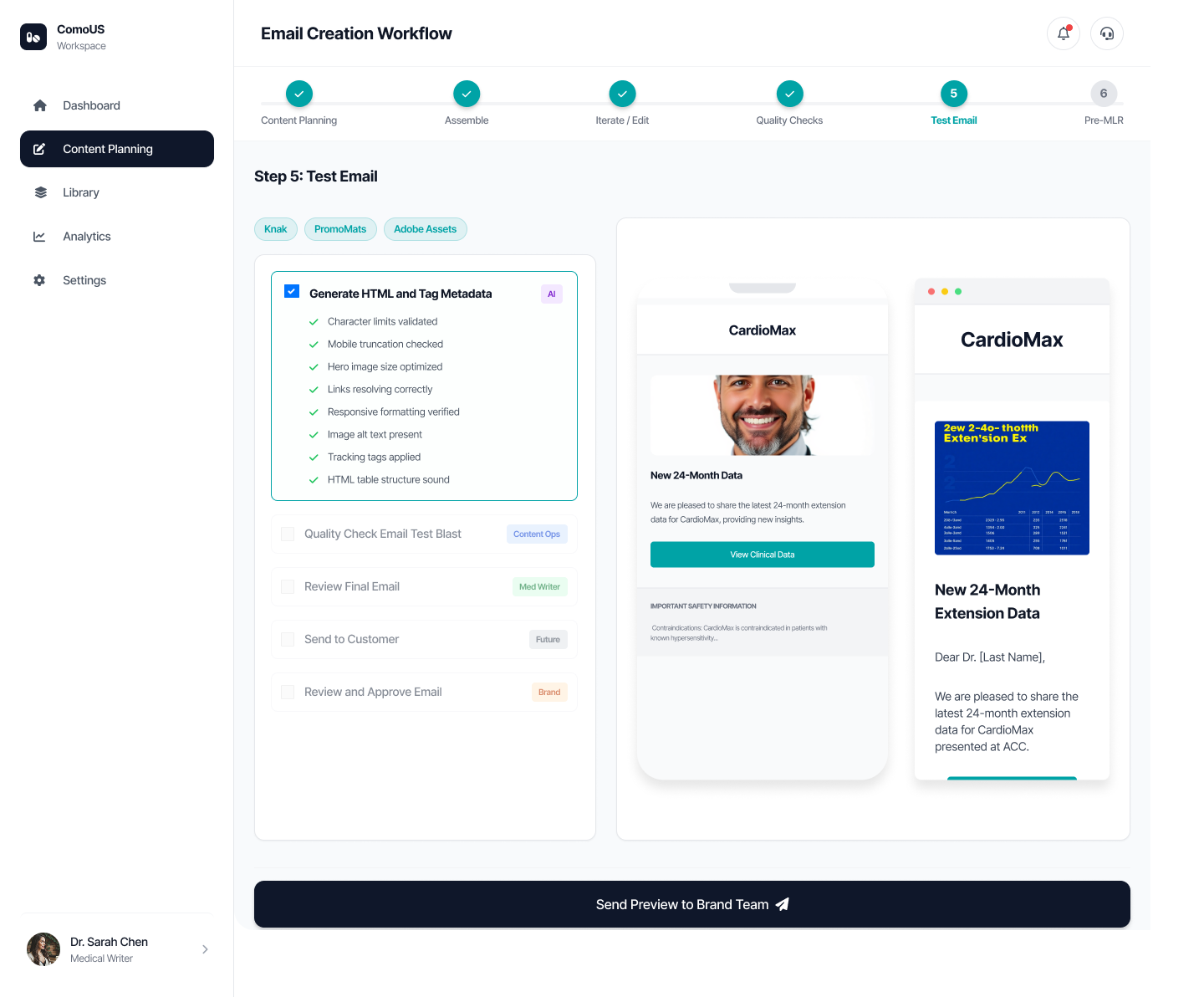 The packet assembled the way reviewers expect it. The AI's job ends exactly where legal accountability starts.
The Gates Are Not Inefficiency
It is tempting to treat regulatory review as friction to be designed away. It's not friction. It's the point. Somebody has to be accountable for what a pharmaceutical company tells a doctor, and that accountability is legally personal.
So the AI's job became the work between humans, and the work humans do stays with them. Assemble the packet. Pull the approved claim library. Pre-check the obvious failures before the reviewer sees it. Carry comments back without a copy-paste round trip.
Every one of those gives time back without moving a single decision away from the person responsible for it.
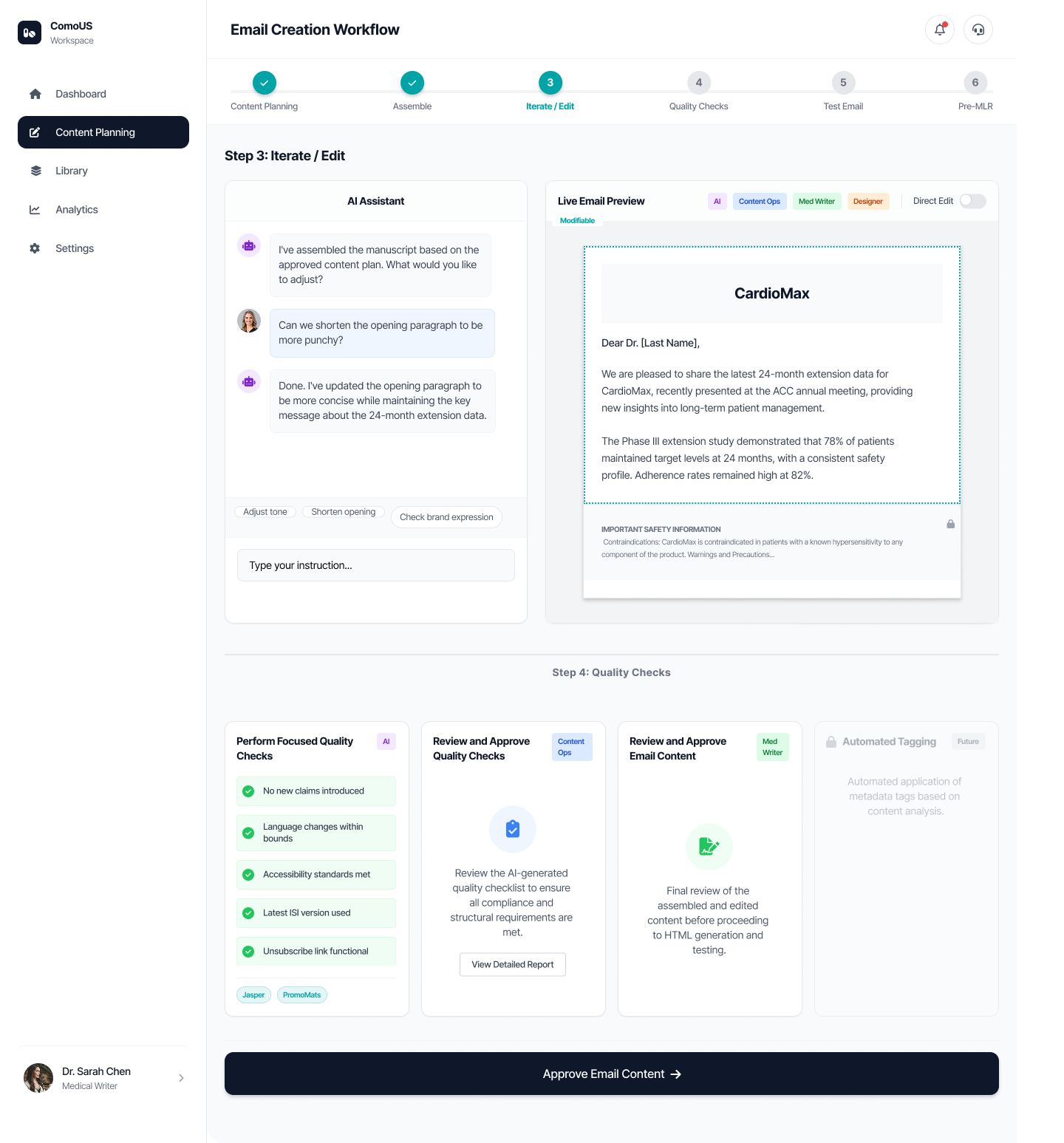 QC inline with editing rather than after it, so a rejection arrives while there's still context to act on.
Where This Applies Beyond Pharma
Any workflow with a sign-off has this shape. Legal, finance, clinical, safety. The instinct is to point the model at the reviewed artefact. The gain is almost always in the space around the review instead.
Ask which steps exist because somebody must be accountable, and leave those alone. Everything else is fair game.
The six-step flow and what I haven't solved are in the ManuscriptRx what a portfolio proves now .
Related UX Design Articles
Building Your First AI-Powered Prototype in a Weekend
A two-day plan to go from idea to a working AI prototype your users can actually click through.
The Work Is Deleting, Not Generating
AI made producing screens almost free. That moved the bottleneck from making things to deciding which ones to throw away, and no model will do that part for you.
Finding the Data Is Half the Job
An analyst searches for revenue and gets forty results. The search worked. The next twenty minutes, deciding which table to trust, is the part nobody designed.