You Don't Replace Excel by Being Better Than Excel
A bank was running multi-million-dollar loan deals in spreadsheets. The software that replaces that has to lose to Excel on flexibility and win on the thing Excel can't do at all.
A bank was running its loan operations in Excel. Deals worth millions of dollars. No audit trail, no validation, no way to tell who changed what or when.
Your first reaction is that this is madness. The better question is why it survived, because it survived against every enterprise system that bank already owned.
Excel Wins on the Thing People Feel
A spreadsheet does exactly what you tell it, immediately, with no ceremony. Add a column. Paste a block. Restructure the whole thing on a phone call. Nothing asks you to file a change request.
Enterprise software loses that fight on purpose, since structure is the point, but it usually loses it without offering enough in return. So people export to Excel, do the actual work there, and paste the result back. The system becomes a filing cabinet for decisions made somewhere else.
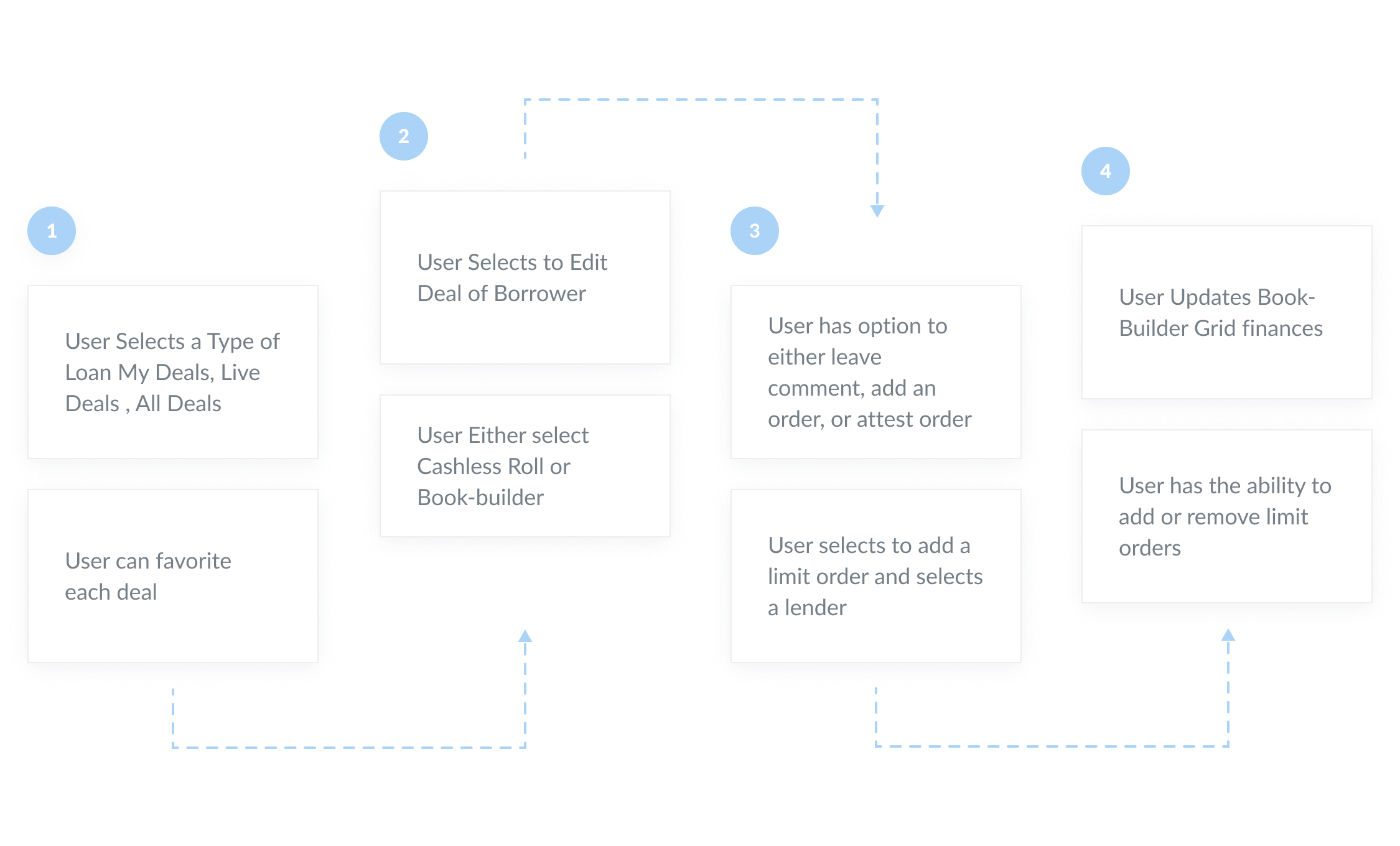 The loan journey end to end, from intake to close. Mapped first, so I could see what the spreadsheet was actually holding together.
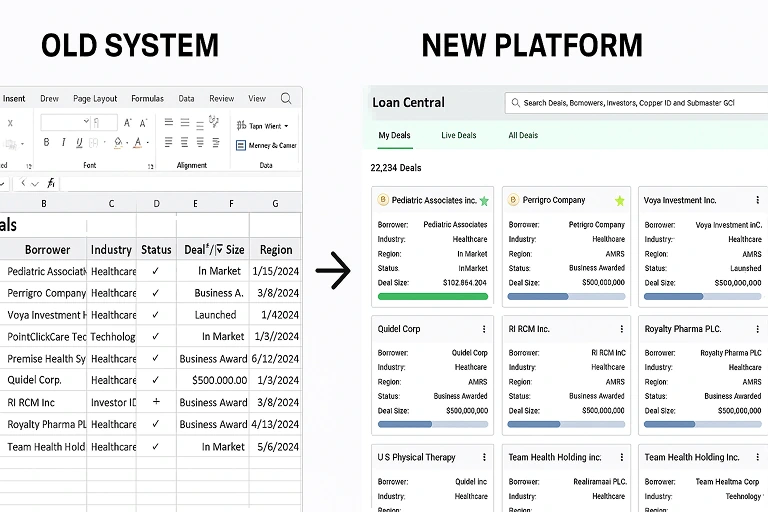 The spreadsheet next to the platform that replaced it. The win was becoming the system of record.
Win on What Excel Cannot Do at All
You won't out-flexible a spreadsheet. What a spreadsheet genuinely can't do is tell you who changed the rate at 4pm on Thursday, or stop someone typing a number that can't be true, or show the same deal to two people without one of them holding a stale copy.
Those aren't features you sell on a slide. They are the things that turn a spreadsheet into a liability the moment a deal goes wrong, and in lending, deals go wrong.
Keep the Workflow, Change the Substrate
The mistake I've watched teams make is treating migration as an opportunity to fix how people work. It's not. The people doing the work built that process against real constraints, and most of it's load-bearing.
Match the shape of what they do now, then add the things only real software can give them. Ask them to change one thing at a time, and let the audit trail be the argument.
How that mapped onto the actual screens is in the Investor Loan Platform what a portfolio proves now .
Related UX Design Articles
If You Make People Do Maths, They Guess or They Leave
A price of 67¢ tells you the odds are 67%. Almost nobody works that out in their head, and the ones who try get it wrong. Do the arithmetic for them.
Finding the Data Is Half the Job
An analyst searches for revenue and gets forty results. The search worked. The next twenty minutes, deciding which table to trust, is the part nobody designed.
Beginner or Pro Is a False Choice, and Both Sides Pay for It
Easy apps hide complexity and charge for it. Pro apps expose everything and assume confidence you may not have. The split is a business decision dressed up as a design one.